
Can Airplane Tires Be Recycled with a Tire Recycling Line? A Technical Overview
Recycling airplane tires is possible but requires significant adaptations to standard tire recycling lines due to their unique structural and material properties. This article explores the technical challenges, process modifications, and equipment needed to recycle aircraft tires effectively.
1. Unique Characteristics of Airplane Tires
Size & Weight: Typically 1-1.5 meters in diameter, weighing 100-200kg.
Material Composition:
Steel belts (50-70% by weight) for reinforcement.
Heat-resistant rubber (rated for 250°C+ during landings).
Aramid/nylon fiber layers for durability.
2. Key Challenges in Recycling
High Steel Content: Standard magnetic separators may struggle with thick steel belts.
Thermal Resistance: Vulcanized rubber requires specialized granulation.
Contaminant Risks: Residual hydraulic fluids or de-icing chemicals.
3. Adapted Recycling Process
Step 1: Pre-Cleaning & Inspection
Remove valves, sensors, and contaminants using EPA-compliant solvent-free methods.
Inspect for chemical residues (e.g., Skydrol hydraulic fluid).
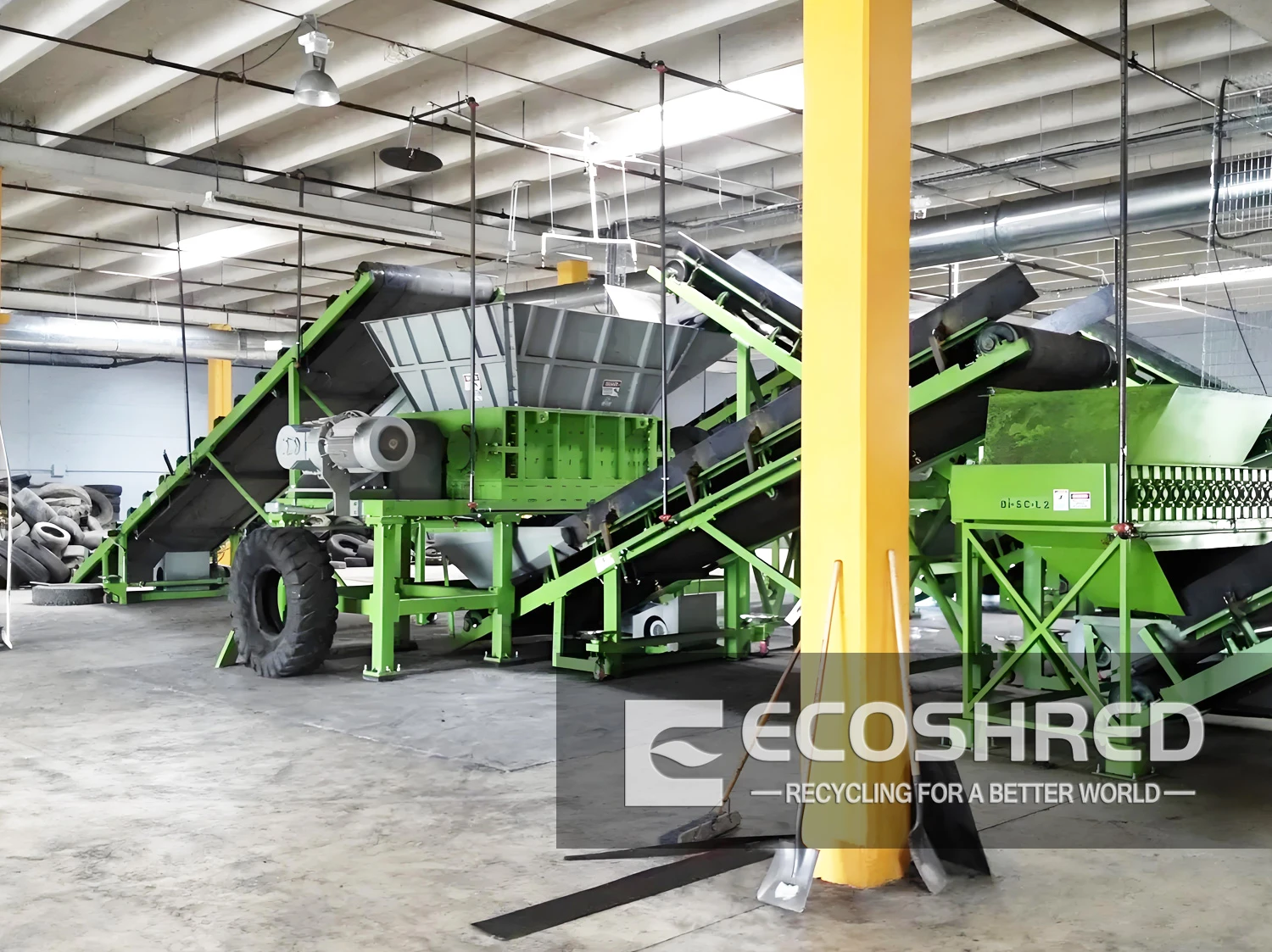
Step 2: Primary Shredding
Equipment: Heavy-duty hydraulic shredders (1,000+ HP) with tungsten carbide blades.
Output: 100-200mm rubber chunks with embedded steel.
Step 3: Steel Separation
High-Intensity Magnets: 18,000 Gauss rare-earth magnets recover 95% of steel.
Eddy Current Systems: Remove non-ferrous metals (e.g., aluminum fragments).
Step 4: Secondary Processing
Cryogenic Granulation: Liquid nitrogen cools rubber to -80°C, enabling efficient size reduction to 1-4mm granules.
Fiber Removal: Air classifiers separate aramid/nylon fibers (<0.5% residue).
Step 5: Quality Control
Testing: ASTM D5644 for metal/fiber content.
Output Standards: Rubber powder purity ≥99.5% for industrial use.
4. Recycled Material Applications
Rubber-Modified Asphalt: Blends with PG 76-22 binder for airport runways.
Industrial Products: High-temperature-resistant flooring or conveyor belts.
Steel Reuse: Aerospace-grade steel sold to metallurgical industries.
5. Regulatory Compliance
FAA Requirements: Track tire history (e.g., part numbers, service cycles).
EPA Guidelines: Limit VOC emissions during shredding (<50ppm) and chemical disposal.