
If you’re already familiar with tire recycling, you might think all tires are basically the same. But once you get into the details, recycling truck tires is a very different story compared to passenger car tires. Understanding these differences is critical if you plan to run a profitable tire recycling operation—or if you’re expanding from car tires into truck tires. Let me walk you through what actually changes when you move from one to the other.
Size and Weight – The Obvious Difference
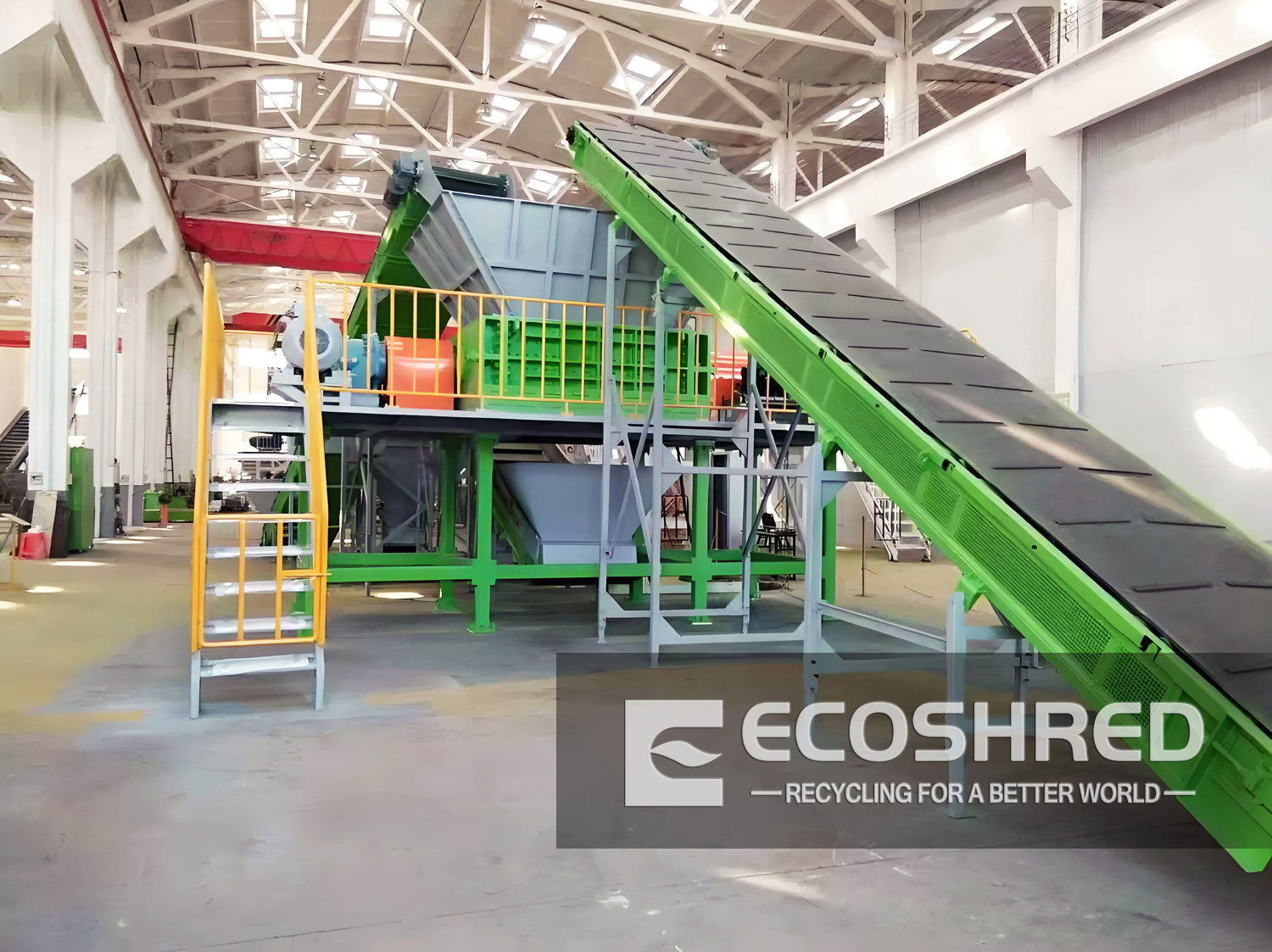
The most visible difference is simply size. A typical passenger car tire weighs around 8–10 kg. A truck tire, depending on whether it’s for a light truck or a heavy-duty long-haul vehicle, can weigh anywhere from 40 kg to over 70 kg. That means your feeding system, conveyor width, and shredder intake need to be significantly larger. At EcoShred, we’ve designed our tire shredders with different rotor configurations to handle both. For car tires alone, a standard shredder works fine. But when truck tires enter the mix, you need a heavier-duty machine with higher torque and more robust cutting knives.
Steel Content and Construction
Here’s something many operators overlook. Car tires typically contain about 20–25% steel by weight, mostly in the bead wires and a steel belt layer under the tread. Truck tires, especially those designed for heavy loads, often contain multiple steel belt layers and a much thicker bead bundle. The total steel content can reach 25–30% or even higher for some off-road truck tires. That’s not just a small difference. It directly impacts how aggressively you need to separate steel in your tire granulation line.
After primary shredding, the material moves to the Rasper stage, where magnets pull out 98–99% of the steel. With truck tires, you might need stronger magnetic separators or multiple magnetic stages because the steel wires are thicker and heavier. Some of our clients in Germany running mixed car and truck tire lines install an extra magnetic drum after the granulator to catch any remaining heavy steel fragments. That small addition makes a huge difference in final rubber purity.
Is Your Goal Rubber Mulch or Fine Granules?
Another practical difference. If you’re producing rubber mulch for landscaping (typically 10–20mm pieces), you can stop after the Rasper stage. Both car and truck tires work fine for this. But if you’re after high-purity 1–5mm rubber granules for sports surfaces or molded products, truck tires require more careful granulation. The additional steel and tougher rubber mean you need a granulator with sharp, durable blades and a reliable screening system to remove any residual nylon or steel.
We’ve helped clients set up dedicated lines for truck tires only, and others who run mixed feeds. The key is understanding that truck tires aren’t just “big car tires.” They’re a different material altogether. A tire recycling line that handles both well usually sits somewhere in the middle—heavy enough for trucks, but efficient enough for cars so you don’t overpay on energy and maintenance.
Real-World Advice from Our Shop
One of our clients in Southeast Asia started with a car-tire-only line processing 1,500 kg/h. When they won a contract to recycle truck tires from a regional logistics company, we helped them retrofit the line with a heavier shredder and an upgraded Rasper. Now they run a mixed feed smoothly, and their steel recovery pays for the extra investment several times over.
We always recommend that clients be honest about their feedstock mix. If you tell us you plan to run 80% car tires and 20% truck tires, we can size your system accordingly. And if you plan to grow into truck tires later, build that into your equipment choice today. It’s much cheaper to size up once than to upgrade twice.
Final Thought
Whether you’re recycling passenger car tires, heavy truck tires, or both, the fundamentals remain the same: shred, separate steel, granulate, and purify. But the details—equipment strength, wear frequency, throughput, and steel recovery strategy—change significantly when truck tires enter the picture. At EcoShred, we’ve seen both sides of this business, and we can help you pick the right configuration from day one.
Ready to set up a tire recycling line that matches your actual tire mix? Contact EcoShred today for a customized recommendation and a clear cost breakdown.