
Understanding the working process of a tire recycling line is essential for anyone considering entering this profitable industry. At EcoShred, we've spent over 20 years perfecting this process for operations in more than 30 countries. Let's walk through it step by step.
Stage 1: Primary Shredding – Reducing the Size
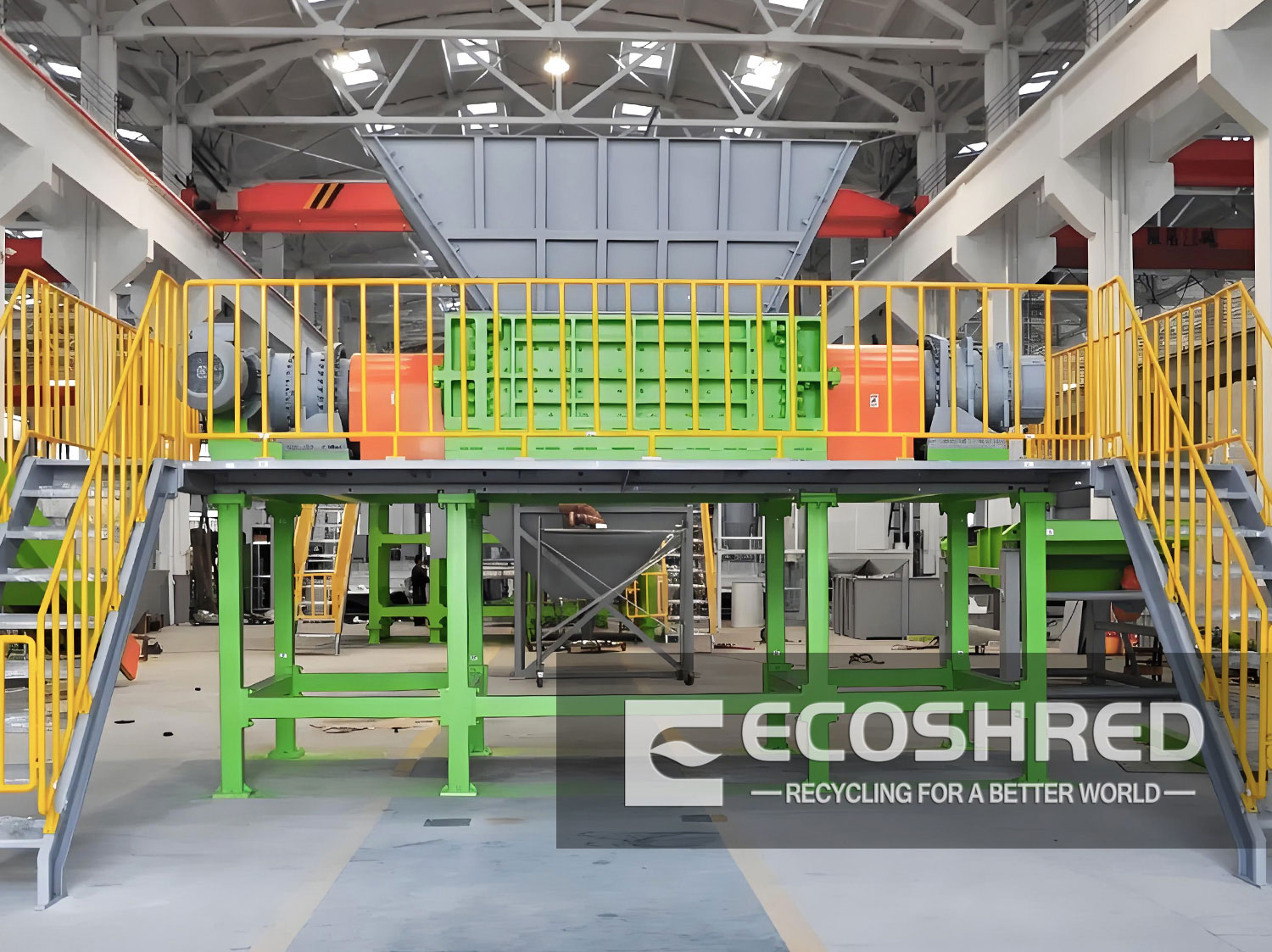
The working process begins with the tire shredder, the workhorse of any recycling line. Whole tires, whether from passenger cars, trucks, or even massive OTR vehicles, should be fed into the shredder. This machine uses powerful, low-speed, high-torque blades to tear the tires into smaller, manageable pieces. The output at this stage is typically 50–150mm tire chips. Why this size? It's the ideal starting point for the next stages of processing.
Stage 2: Secondary Shredding and Steel Separation
The shredded material then moves to the Rasper (also called a secondary shredder or grater). This is where the real transformation begins. The Rasper further tears the tire chips using rotating and stationary blades, reducing the material to smaller, more uniform pieces. Critically, this is also where most of the steel is recovered. As the rubber is torn, the steel wires are exposed and released. Powerful overhead magnetic separators, positioned above the conveyor, pull out the steel, achieving a recovery rate of 98–99%. This clean, high-quality steel scrap becomes an immediate revenue stream for recyclers.
Why is steel removal at this stage so important? If the steel traveled further down the line, it would damage the precision machinery used for fine grinding and contaminate the final rubber product. Our Rasper systems are engineered to maximize steel liberation while minimizing wear, thanks to durable construction and intelligent design.
Stage 3: Granulation – Creating the Final Product
Once the majority of the steel is removed, the rubber mulch enter the granulator. This machine is the heart of a tire granulation line. It uses high-speed rotating blades to cut the rubber into consistently sized granules. Depending on your target market, the output can be calibrated. Our granulators typically produce granules ranging from 1–5mm, ideal for applications like playground surfaces, sports fields, and rubber flooring. The precision of this stage determines the quality and market value of your final product.
Stage 4: Nylon and Final Steel Separation
The granules leaving the granulator still contain residual fiber (nylon) and maybe traces of fine steel. The working process isn't complete without thorough cleaning. The material passes through a series of vibrating screens and air separators with screens sorting the granules by size. Air separators use airflow to lift and remove the light nylon fibers, which are collected separately. Final magnetic drums ensure any last bits of steel are captured. The rubber granules with a purity of up to 99.9%, will be ready for the market.
Process Variations Based on End Product
It's worth noting that the working process can be adjusted based on what you want to produce. If your goal is rubber mulch for landscaping (typically 10–20mm), the process might stop after the Rasper stage, skipping the fine granulation. For those aiming at the high-value market for ultra-fine rubber powder (40–120 mesh), additional equipment like fine mills is added after the granulator to achieve that super-fine consistency. Our systems are designed with flexibility in mind, allowing you to configure the line for your specific business goals.
The Intelligence Behind the Process
Modern tire recycling isn't just about mechanical power; it's about smart control. Our tire recycling lines feature PLC touch-screen intelligent control systems. Operators can monitor the entire process, set parameters, and receive fault alerts in real-time. The system also logs production data, helping you analyze performance and optimize efficiency. For those seeking even greater connectivity, IoT capabilities can be added, though most clients find our standard smart controls perfectly sufficient for reliable daily operation.
From Waste to Worth
In summary, the working process of a tire recycling line is a carefully orchestrated sequence of size reduction, separation, and purification. It transforms an environmental liability into valuable commodities: clean rubber granules, reclaimed steel, and separated fiber. With the right equipment and understanding, it's a process that builds a sustainable business.
Ready to start your own tire recycling journey? Contact EcoShred today to discuss your needs and learn how our complete tire granulation lines can turn waste tires into your most valuable resource.