
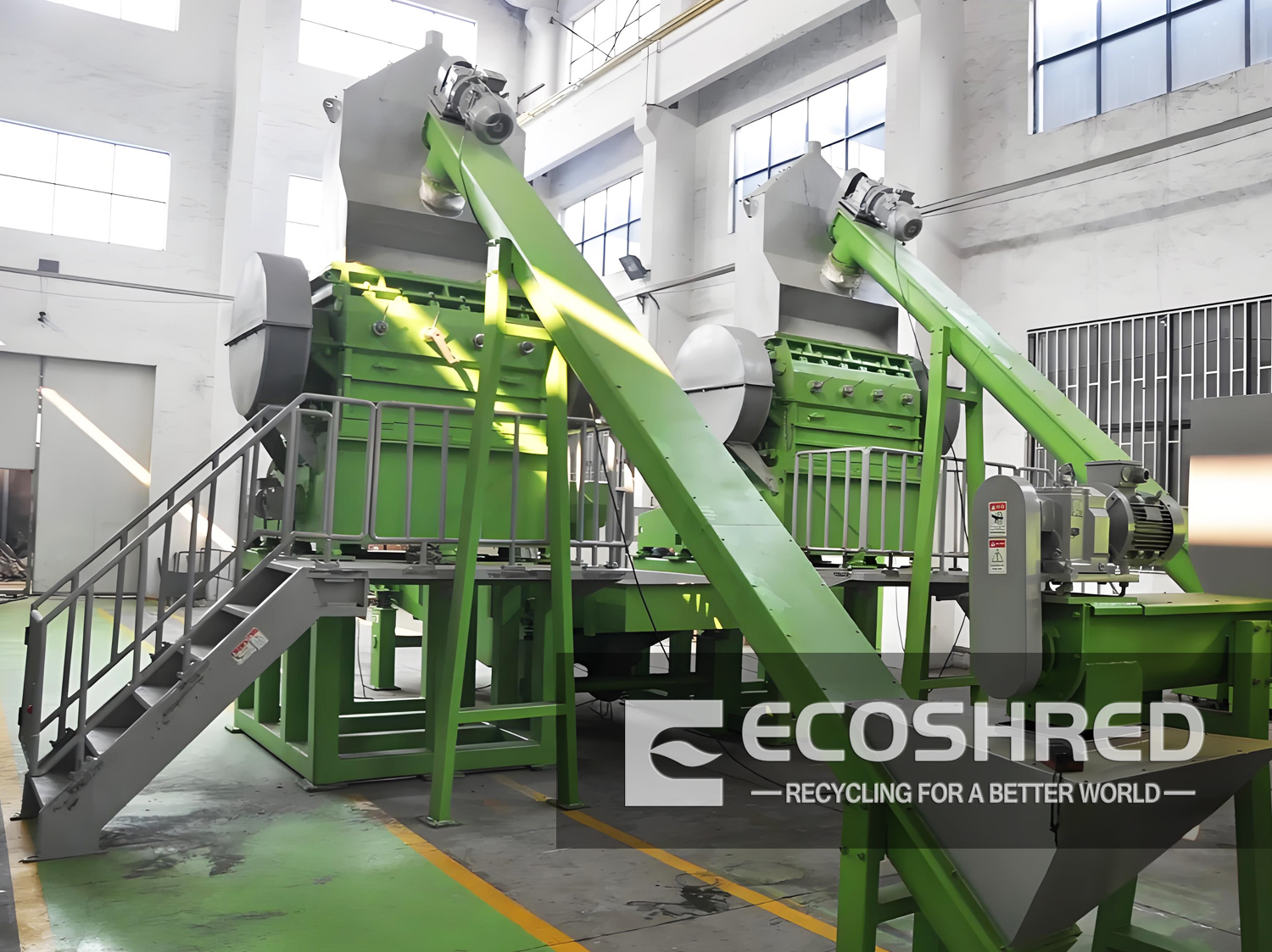
When you're setting up a tire recycling operation, one of the biggest decisions you'll face is choosing the right capacity. Should you start small and grow later? Or go bigger from day one? While a smaller line might seem like the safer, lower-cost entry point, the reality is that higher capacity often delivers better long-term value. Let's explore why investing in a higher-capacity tire recycling line is usually the smarter move for building a profitable, sustainable business.
Lower Operating Costs Per Ton
One of the most compelling reasons to choose higher capacity is the simple economics of scale. A tire granulation line rated for 3,000 kg per hour doesn't cost three times as much to run as a 1,000 kg line. In fact, the operating costs—labor, electricity, maintenance—scale more slowly than the output. You still need one operator per shift, one facility, one set of permits, and one management team. When you spread these fixed costs over more tons of processed material, your cost per ton drops significantly. That's pure margin improvement.
Faster Payback on Your Investment
Every recycling business owner wants to see their equipment pay for itself as quickly as possible. A higher-capacity system processes more material in the same amount of time, which means you generate revenue faster. Let's say your target is to process 10,000 tons per year. A 1,000 kg/h line running one shift might take two years to hit that target. A 3,000 kg/h line could achieve the same volume in less than a year, accelerating your return on investment and freeing up capital for your next growth phase. At EcoShred, we've seen this pattern play out across more than 30 countries where we've installed our systems.
Competitive Advantage in the Market
Capacity matters when you're competing for feedstock and selling finished products. If you can process more tires than your local competitors, you can secure larger contracts from tire collectors, municipalities, and waste management companies. You become the reliable partner who can handle volume when it matters. Similarly, on the sales side, consistent high-volume production makes you a dependable supplier of rubber granules and recovered steel. Buyers prefer suppliers who can deliver steady quantities without interruption.
Better Utilization of Floor Space
Your facility footprint is a fixed asset. Whether you're leasing or owning, the square footage costs you the similar regardless of whether you're processing 500 kg or 1,000 kg per hour. A higher-capacity tire recycling line allows you to maximize output from the same physical space. Our heavy-duty systems are designed with compact footprints relative to their throughput, meaning you get more production capacity without proportionally increasing your facility costs. That's efficiency that flows straight to your bottom line.
Handling Peak Demands with Ease
In the recycling business, feedstock doesn't always arrive at a steady, predictable rate. There are seasonal peaks, special collection events, and large contracts that require fast processing. With a higher-capacity tire granulation line, you have the flexibility to ramp up when needed without running multiple shifts or overtime that strains your team and equipment. You can handle surges comfortably and still have capacity room for growth. Starting with a system that's too small often means bottlenecking your operation and turning away profitable opportunities.
What About Maintenance and Reliability?
Some operators worry that higher capacity means more maintenance headaches. In reality, well-designed systems like ours are built for continuous operation with durable components. Our PLC touch-screen intelligent control system monitors performance, logs data, and provides fault alerts so you can address issues before they become downtime events. We also offer global engineering support for installation and maintenance, ensuring your high-capacity line stays productive year after year.
Making the Right Choice for Your Business
Of course, higher capacity requires a larger initial investment. But when you consider the lower cost per ton, faster payback, competitive advantages, and room to grow, the math often favors going bigger from the start. The key is choosing a system matched to your realistic feedstock supply and market demand. We specialize in customizing solutions, from 500 kg/h lines for smaller operations to 5,000 kg/h plants for large-scale producers.
Is higher capacity right for you? That depends on your goals. If you're looking to build a serious, scalable business in tire recycling, starting with higher capacity positions you for long-term success rather than short-term limitations.
Ready to explore what a high-capacity tire granulation line could do for your operation? Contact EcoShred today to discuss your processing goals and get a tailored recommendation that balances capacity, cost, and profitability.